
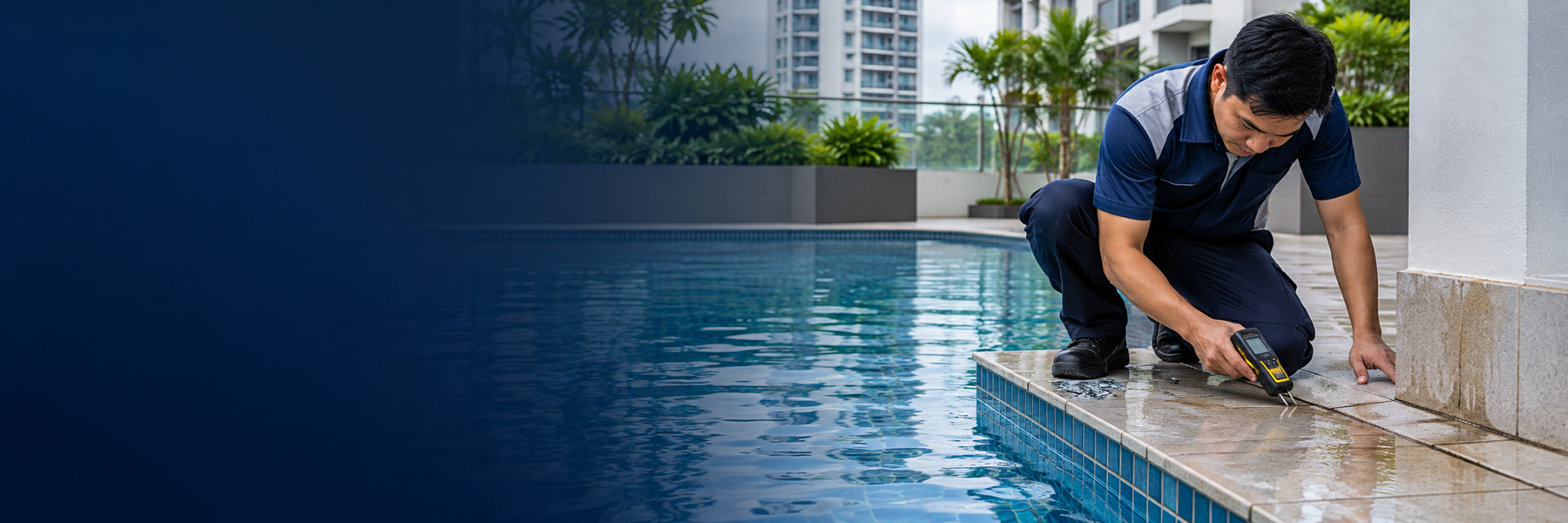
Find the likely water path before choosing a repair method
About Pool Leak Investigation
Pro Pool has 15 years of experience supporting swimming pool systems in Singapore. We review the symptoms, accessible pool areas and operating equipment before recommending a practical next step. The aim is to separate likely leakage from normal water loss and determine what further testing, repair or renovation may be appropriate.
Signs That Need Assessment
Record how quickly the level changes, whether the equipment is operating and where moisture appears. This information can help narrow the investigation. Avoid repeatedly topping up a suspected leak without review, because continued water loss may affect finishes, surrounding construction and operating costs.
Where Swimming Pool Leaks Can Begin
Pool water can move through several connected systems and construction details before it becomes visible. The wettest mark is not always directly beside the defect, especially when water travels along a slab, pipe route or joint. We examine the accessible evidence and may recommend additional observation or testing where the first inspection cannot establish enough information.
Typical areas considered during a leak investigation include:
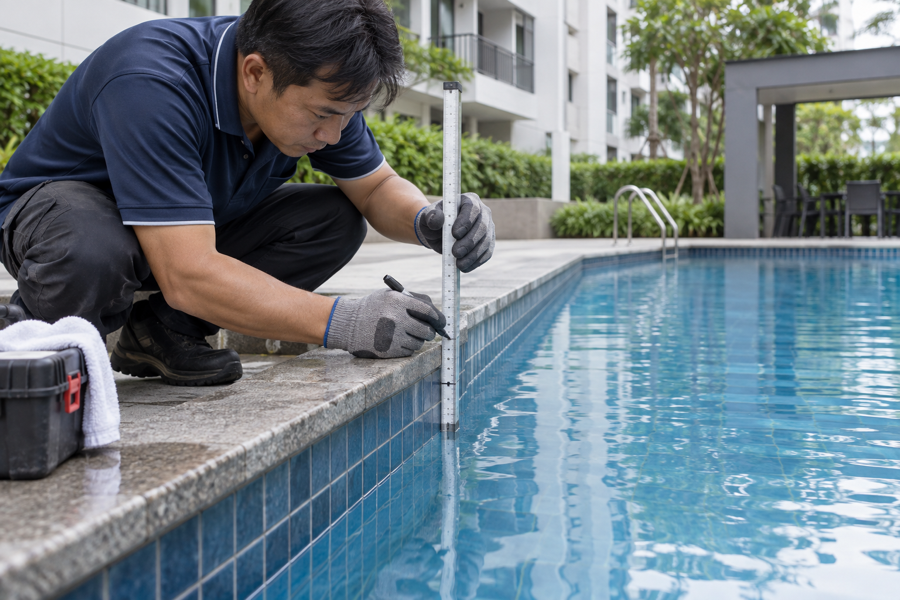
Simple observations can make the assessment more productive. Marking the water level, noting recent rainfall and comparing loss while the circulation system is on and off can reveal a useful pattern, provided this can be done safely. Maintenance records may show when filters were backwashed, valves changed or equipment serviced. These clues do not replace proper investigation, but they help separate water intentionally discharged by the system from unexplained loss through the pool or its connected components.
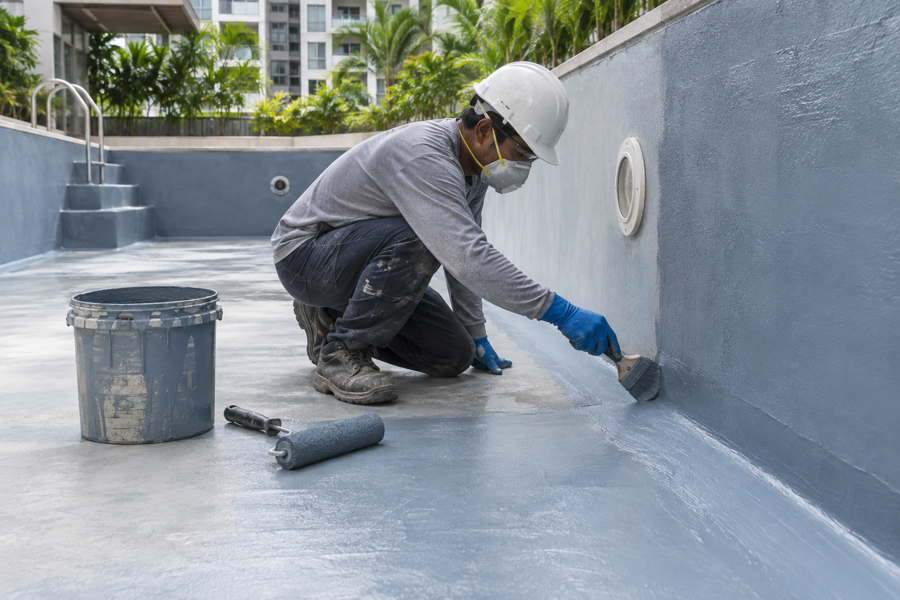
Shell, Joints and Waterproofing
Cracks, construction joints, penetrations and an aged or damaged waterproofing system may allow water to move into surrounding construction. The suitable repair depends on the substrate, defect, access and condition of the finishes.
Tiles, Grout and Fittings
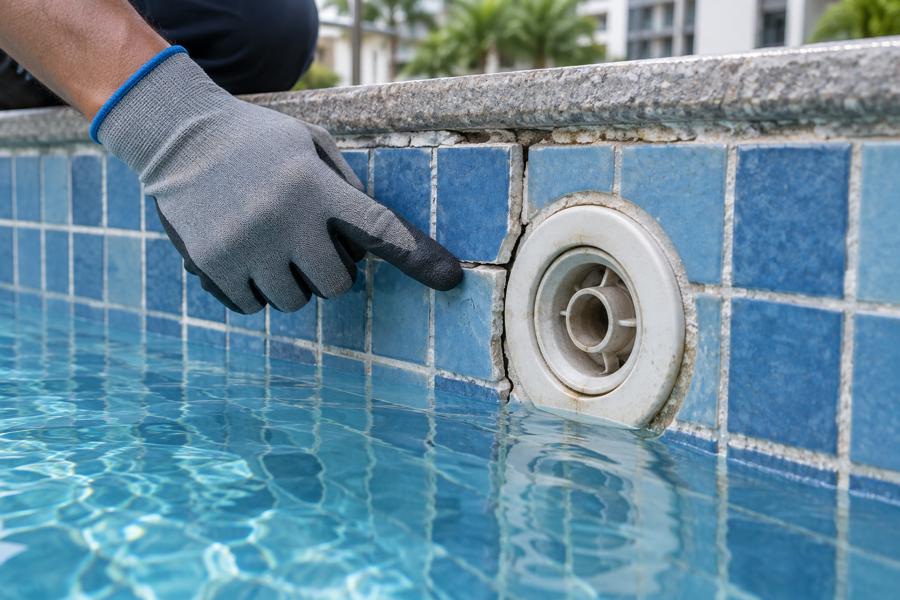
Missing grout, loose tiles and failed seals around lights, returns, drains or other fittings can indicate deterioration. Surface defects must be assessed carefully because the visible gap may not be the only water path.
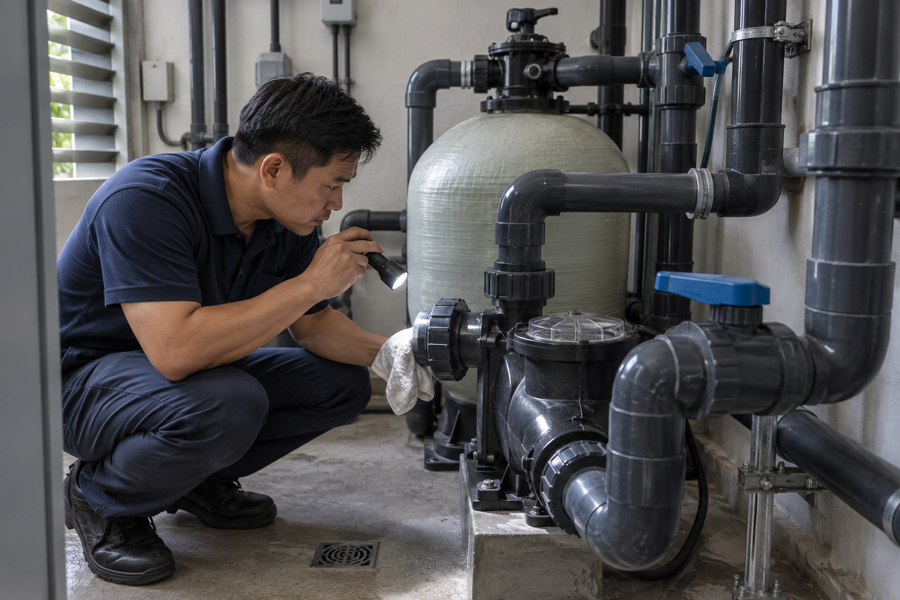
Circulation Pipework
Suction and return lines, valves and accessible equipment connections may leak under particular operating conditions. Changes that occur only when the system runs can help determine whether pipework or equipment needs closer testing.
Deck and Surrounding Areas
Water can also enter from rain, washdown, overflow, failed deck joints or nearby drainage rather than the pool vessel itself. Reviewing the surrounding area helps avoid treating the wrong source.
Choosing a Practical Repair Route
Once the likely source and extent are understood, the repair can be scoped around the affected material and available access. Some faults may be suitable for a local repair. Wider deterioration, repeated failure or ageing finishes may point towards coordinated pool renovation. We explain the proposed area, preparation and limitations before work proceeds.
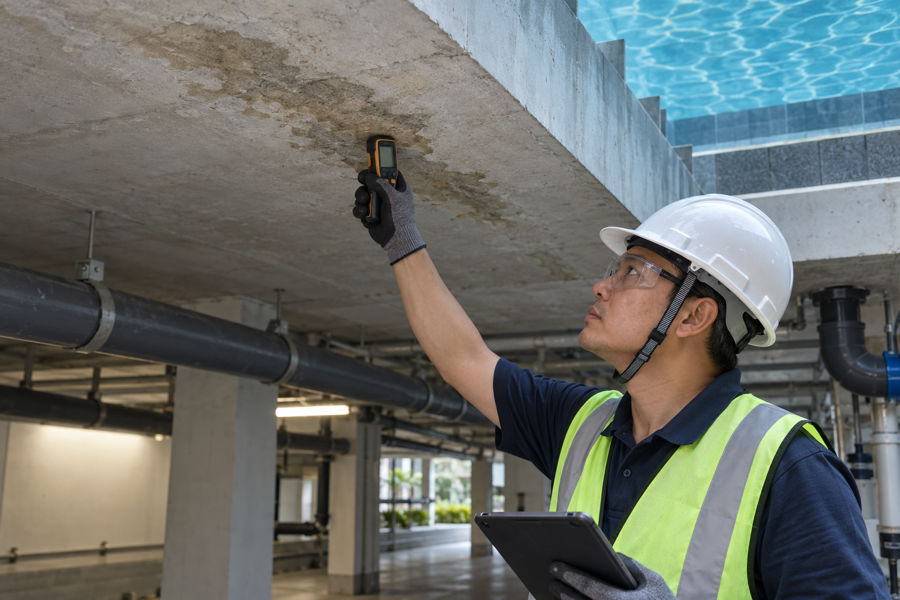
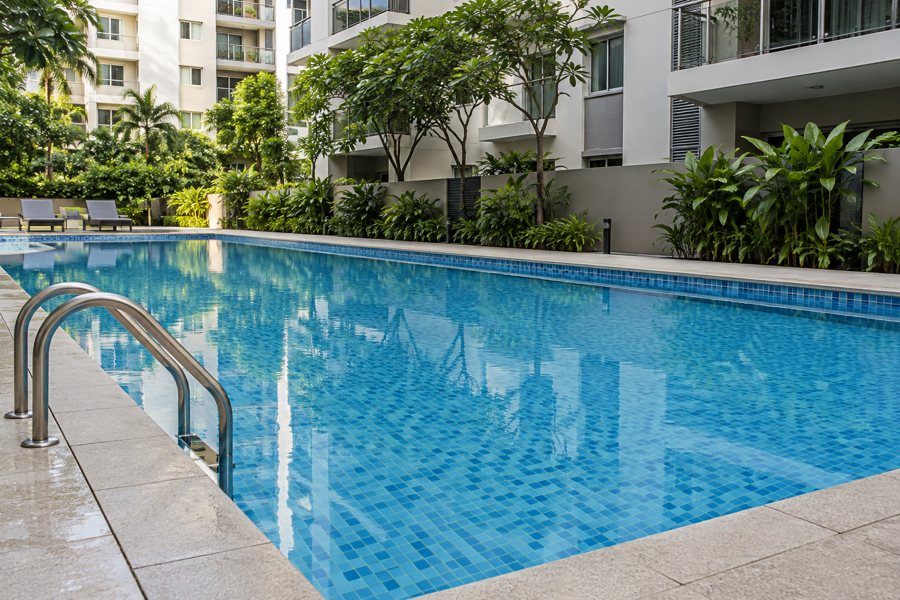
Leakage work should also consider what lies around or below the pool. A private pool beside landscaping, a rooftop pool above occupied space and a condominium pool over a car park present different consequences and access constraints. If water is affecting electrical equipment, ceilings or occupied areas, the property should take suitable safety precautions while the source is investigated. Repair planning may need coordination with other trades when damage extends beyond the pool system itself.
Local Joint or Fitting Repair
A discrete failed joint, seal or accessible fitting may be repairable without renewing the whole pool. The surrounding condition and compatibility of the repair materials should still be reviewed.
Pipe or Equipment Repair
Where evidence points to circulation pipework or equipment, further testing or access may be needed. The repair should address the affected component rather than covering the symptom with surface waterproofing.
Waterproofing and Finish Renewal
If the waterproofing or tiled finish has deteriorated across a larger area, preparation and reinstatement become part of the solution. The project may require draining, drying, curing, testing and controlled refilling.
Monitoring After Repair
A repaired pool should be observed through an appropriate test and operating period before surrounding damage is closed up or final conclusions are drawn. Retained moisture may take time to dry even after water entry stops.
A Simple First Check for Unexplained Water Loss
PUB’s guide to finding and fixing water leaks describes a level-drop test for swimming pools with fittings and pumps switched off. It is a useful observation, not a complete diagnosis: evaporation, operating conditions, pipework and the pool shell still need to be considered. Once the likely route is understood, the next step may be targeted pool repair or a broader renovation and waterproofing scope.
How do I know whether my swimming pool is leaking? A repeated drop beyond the pool's normal pattern, dampness nearby or changes linked to equipment operation can justify assessment. Measuring and recording the pattern provides useful evidence. Can the visible damp patch be away from the actual leak? Yes. Water can travel through joints, slabs, finishes and pipe routes before appearing. We review the surrounding construction and operating pattern rather than treating the stain alone. Does every pool leak require draining the pool? No. The need to drain depends on the suspected source, access, test and repair method. We explain the practical requirements after assessing the condition. Can Pro Pool repair leaking tiles, fittings and pipework? We assess tile, grout, fitting, pipe and equipment-related problems and recommend an appropriate repair where the work is within our confirmed scope. When is pool renovation better than a local repair? Renovation may be more practical when deterioration is widespread, several systems need renewal or earlier local repairs have not addressed the underlying condition.Frequently Asked Questions