

Maintenance structured around the site, users and operating needs
Maintenance for Managed Properties
Pro Pool has 15 years of experience supporting residential and commercial swimming pools in Singapore. We work with the site representative to understand the facility, access arrangements, usage pattern and current systems before proposing a maintenance schedule. The aim is dependable day-to-day care with a clear route for repairs or upgrades when they are needed.
A Scope That Matches the Facility
The property operator remains responsible for its regulatory duties. Singapore’s NEA guidance for aquatic facilities explains licensing and water-quality obligations for relevant non-residential premises. Any laboratory testing or submission support must be expressly included in the agreed scope.
What a Maintenance Plan Can Cover
We first identify the pools and associated water bodies, circulation equipment and areas included in the contract. This creates a clearer basis for scheduling work and reviewing performance. It also separates recurring maintenance from repairs, replacement parts, major cleaning, renovation or specialist testing that may need separate approval.
The precise frequency and tasks depend on the facility. A typical discussion covers the following areas:
Service planning should also account for predictable changes. Heavy use, school programmes, events, nearby landscaping and periods of wet weather can change the amount of debris and the demands on circulation or treatment. If a facility includes a main pool, children’s pool, spa pool and decorative water feature, each water body should be listed separately so its equipment and maintenance needs are not overlooked. This asset-level view makes quotations easier to compare and helps the site team understand exactly what is being serviced.
Pool and Surrounding Area Care
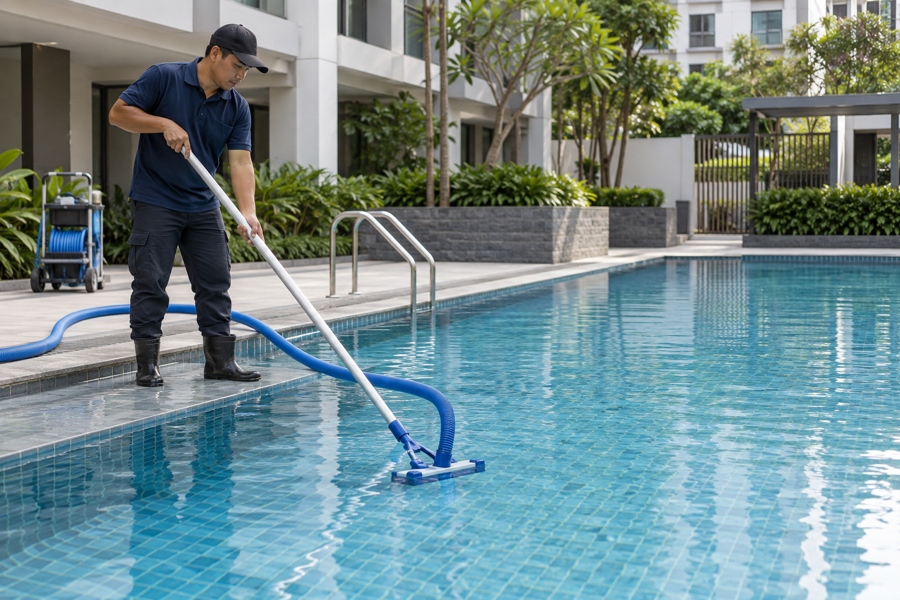
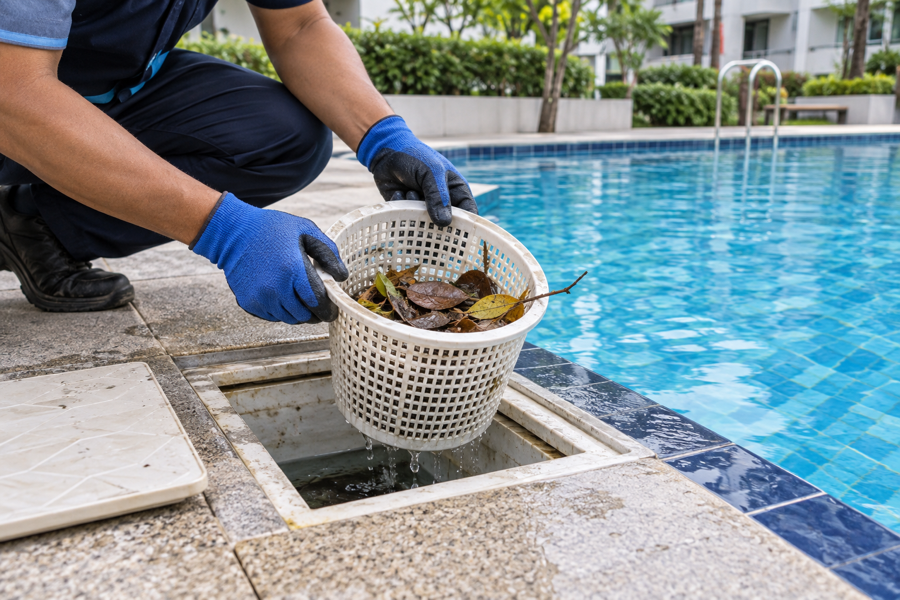
Routine work may include removing debris, brushing or vacuuming pool surfaces, attending to waterline deposits and checking accessible grates, baskets and surrounding conditions. The agreed scope should state which deck or ancillary areas are included.
Water Condition Monitoring
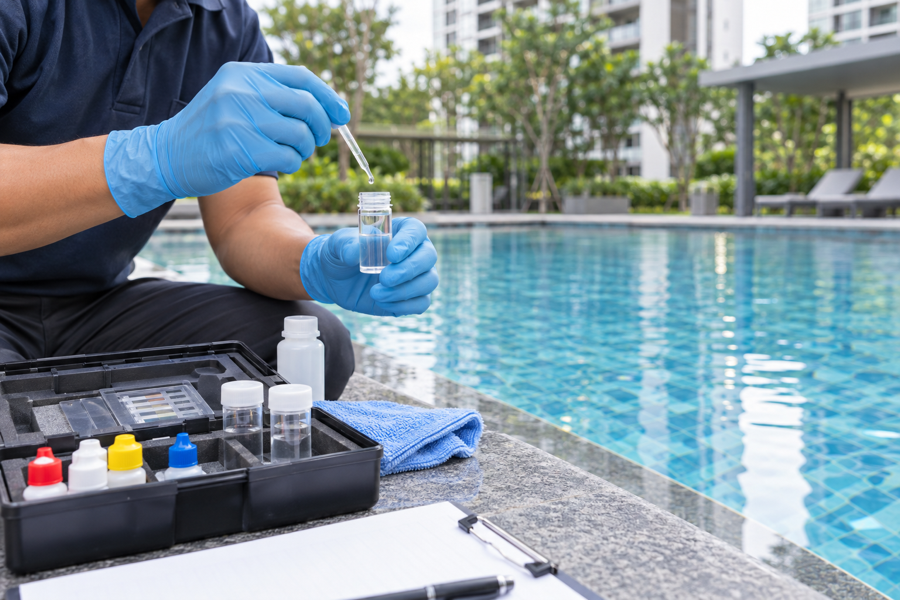
On-site checks help the service team observe changes in water clarity and operating conditions. Licensable facilities may also require prescribed testing by an accredited laboratory; that is separate unless specifically arranged and documented.
Circulation and Filtration Checks
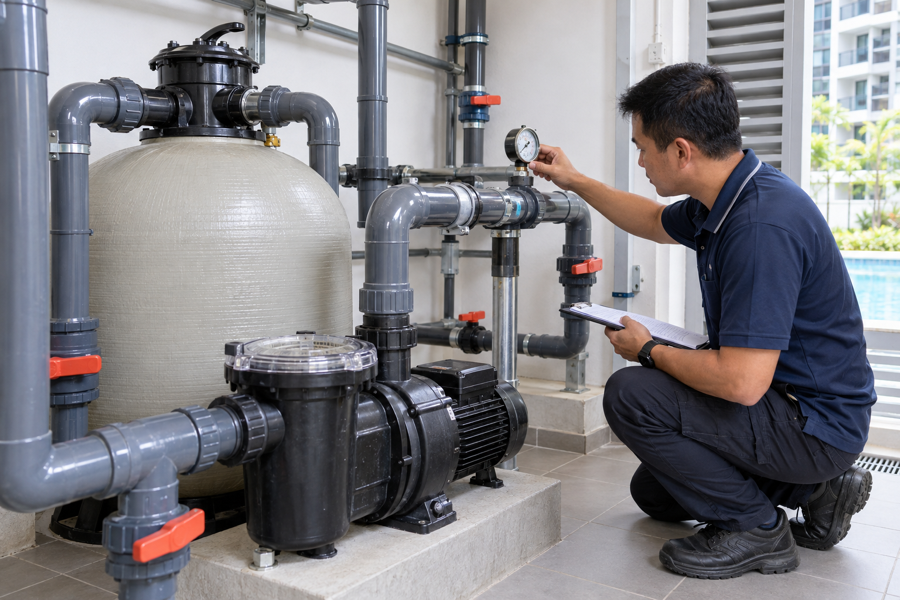
Pumps, filters, strainers, valves, dosing equipment and visible pipework can be observed during routine visits. Unusual noise, pressure, leakage or flow should be reported for diagnosis before a breakdown becomes more disruptive.
Fault Reporting and Repair Planning
Not every issue should be handled as part of routine maintenance. We explain visible findings and recommend a next step, whether that is adjustment, further investigation, a pool repair or planned replacement through our equipment service.
Working With Facility and Management Teams
Good commercial maintenance depends on communication as much as physical servicing. A named site contact, agreed access procedure and sensible escalation route help work proceed without confusion. For facilities with several water bodies or restricted operating windows, the proposal should identify priorities and any tasks that require advance closure or coordination.
The site and contractor should agree how urgent observations are communicated, who can approve chargeable work and where service records are kept. A low water level, equipment trip or sudden loss of clarity may need faster attention than a cosmetic defect, but the response should still follow the property’s safety and approval procedures. Periodic review of the maintenance scope is useful when equipment changes, facilities are renovated or actual use differs from the original assumptions.
Site Assessment
We review the facility layout, accessible systems, current condition and service expectations. Existing records, equipment information and recurring concerns can help us understand the operating history.
Agreed Schedule
The service frequency and routine tasks are defined for the actual property. Timing can be coordinated around opening hours, resident use, school activities, events or other site requirements.
Maintenance Records
Visit records should capture the agreed checks and noteworthy observations in a usable format. Confirm the exact reporting format and any additional documentation requirements when reviewing the proposal.
Repair and Improvement Support
When maintenance identifies deterioration or equipment trouble, we can assess the issue and provide a separate repair or upgrade recommendation. This keeps unplanned work transparent and subject to the property’s approval process.


Operator Responsibilities and Related Services
NEA’s current Aquatic Facilities guidance explains licensing, daily on-site testing and accredited laboratory submissions for licensable facilities at non-residential premises. The operator or licensee should confirm which duties remain in-house and which are included in a contractor’s scope. Routine visits can be coordinated with pool cleaning, while faults may be referred to pool repair or equipment support.
Does Pro Pool maintain condominium swimming pools? Yes. We can assess shared residential facilities and propose a maintenance scope based on the pools, equipment, access and operating requirements at the property. Do you work with commercial and institutional properties? Pro Pool supports residential and commercial pools. The exact facility type, service schedule and documentation needs should be confirmed during the initial review. Can one plan include pools, jacuzzis and water features? Potentially. Identify every water body during the assessment so we can confirm which facilities and systems fall within our service scope. Does routine maintenance include major repairs? Routine servicing and major repairs are normally treated separately. If we identify a fault, we explain the finding and provide a recommended next step or separate repair scope. Does Pro Pool handle NEA laboratory testing and submissions? These services are included only when expressly confirmed in the proposal. Operators should check their current obligations with NEA and verify the testing and submission arrangements for their facility.Frequently Asked Questions